
Lower Back Pain in Young Adults
A decade ago, lower back pain was something people expected in their 50s or 60s. Today, orthopaedic clinics are seeing more patients in their 20s and 30s walking in with stiff, aching backs. Software professionals, college students, delivery riders and young parents all report the same complaint: a dull ache that starts after a long day and slowly becomes part of everyday life.
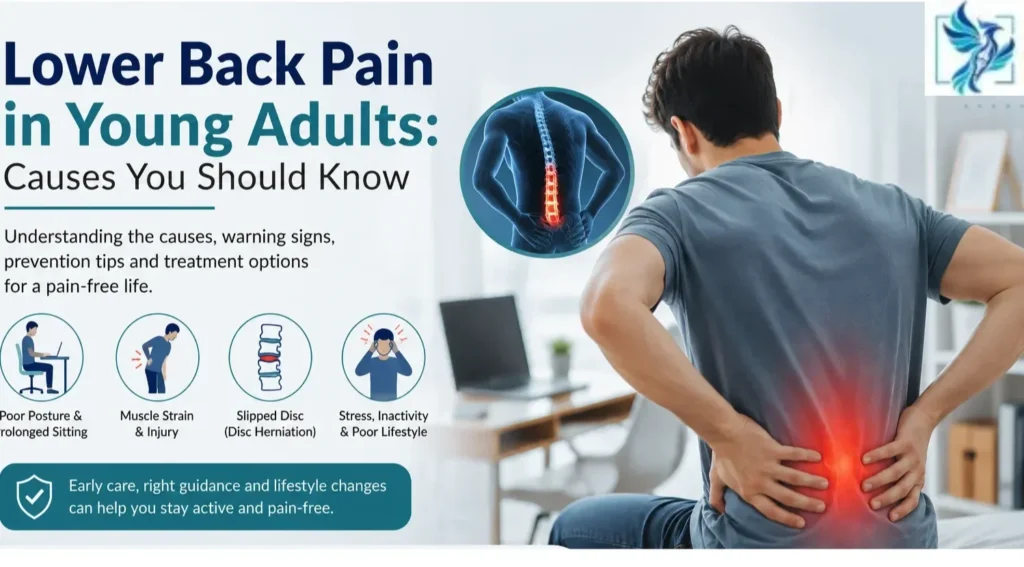
If you are dealing with back pain in a young age, you are far from alone. In this guide, we explain what lower back pain is, why lower back pain in young adults is on the rise, the causes in men and women, when you should be worried, and how to prevent and treat it.
What Is Lower Back Pain?
Lower back pain is discomfort, stiffness or aching felt in the area below the ribs and above the buttocks. This region is called the lumbar spine. It is made of five large vertebrae (L1 to L5) cushioned by discs and held together by strong muscles, ligaments and joints. Because the lumbar spine carries most of your upper body weight and allows you to bend, twist and lift, it is the part of the spine most prone to strain.
Lumbar spine pain can be dull, sharp, burning or cramp-like. It may stay in the back or travel into the buttocks and legs. Doctors usually describe it as:
- Acute: lasting a few days to a few weeks, often after a strain or awkward movement.
- Subacute: lasting between 6 and 12 weeks.
- Chronic: lasting longer than 12 weeks and needing a proper evaluation.
Why Are More Young Adults Experiencing Lower Back Pain?
Most lower back problems in young people are linked to lifestyle rather than aging. Here are the main lower back pain causes seen in the 20 to 35 age group.
1. Sitting Too Long and Desk Jobs
Back pain from sitting too long is the number one reason young people seek help. When you sit for hours, especially slouched, pressure on the lumbar discs increases and the muscles that support your spine become inactive. Back pain in office workers has risen further with work-from-home and hybrid setups, where many people work from a bed, sofa or dining table instead of a proper desk and chair.
2. Poor Posture
Yes, poor posture can cause lower back pain. Slouching over a laptop or phone rounds the spine and overloads the ligaments and muscles of the lower back. Over months, this leads to muscle fatigue, tight hip flexors and irritated spinal joints. Posture-related pain is usually dull, worsens as the day goes on and eases when you move around or lie flat.
3. Weak Core and Glute Muscles
Your abdominal, back and glute muscles act like a natural corset for the spine. When they are weak from inactivity, the discs and joints absorb forces they were never meant to handle alone. Many young adults look fit but have a weak core, which makes them prone to sudden back strain.
4. Wrong Gym Habits and Sudden Overload
Starting heavy deadlifts, squats or high-intensity workouts without proper form, a warm-up or supervision is a common cause of severe lower back pain in young men and women. Lifting too much too soon can cause muscle strains, ligament sprains and even disc injuries.
5. Sedentary Lifestyle and Excess Weight
Commuting by vehicle, ordering everything online and spending leisure time on screens means far less movement than earlier generations. Extra weight, especially around the abdomen, shifts the centre of gravity forward and adds stress to the lower spine.
6. Long Commutes on Two-Wheelers and Cars
In busy cities like Pune, long daily rides through traffic, potholes and constant vibration put steady stress on the lower back, particularly with a slouched riding position or poor seat support.
7. Stress, Poor Sleep and Low Vitamin D
Stress keeps muscles tense, and the back is a common place to hold that tension. Poor sleep lowers your pain threshold and slows recovery. Low vitamin D levels, very common in India despite plenty of sunshine because of indoor lifestyles, are also linked with muscle weakness and generalised body and back aches. Smoking adds to the problem by reducing blood supply to the spinal discs.
Causes of Lower Back Pain in Men
The causes of lower back pain in men are often related to physical load and activity. Common reasons include:
- Muscle and ligament strain from heavy lifting, sports, manual work or bad gym technique.
- Prolonged sitting and driving, which stiffens the lower back and tightens the hamstrings.
- Disc problems, such as a disc bulge, from repeated bending and lifting.
- Ankylosing spondylitis, an inflammatory condition that is more common in young men. It typically causes morning stiffness and pain that improves with movement and worsens with rest.
- Kidney stones or urinary and prostate infections, which can sometimes cause pain in the lower back and need medical attention.
What Causes Lower Back Pain in Females?
Women can have all the mechanical causes above, along with a few that are specific to female health. The main causes for lower back pain in females include:
- Menstrual cramps: many women feel lower back pain just before or during their periods.
- Conditions such as endometriosis, fibroids or ovarian cysts, which may cause persistent pelvic and lower back pain.
- Pregnancy and the postpartum period: weight gain, hormonal changes and weakened abdominal muscles put extra strain on the spine. Carrying and feeding a baby adds to this.
- Urinary tract infections, which can cause lower back or flank pain along with burning urine.
- Low vitamin D and calcium, which weaken muscles and bones.
- Heavy handbags, long standing hours and high heels, which alter posture and load the lumbar spine.
If your back pain is cyclical, linked to your periods, or comes with unusual bleeding or pelvic pain, consult a gynaecologist along with an orthopaedic doctor.
Is Lower Back Pain Normal at Age 20 to 30?
It is common, but it should not be dismissed as normal. Occasional stiffness after a long day or a workout is expected. However, pain that keeps coming back, lasts more than a few weeks, or interferes with sleep, work or exercise is a sign that something needs to change, whether it is your posture, activity level or an underlying condition. The earlier it is addressed, the easier it is to treat.
When Should I Be Worried About Lower Back Pain?
Most back pain is mechanical and improves with the right care. But severe lower back pain or the following signs mean you should see a doctor without delay:
- Pain lasting more than two to three weeks, or getting steadily worse
- Pain that travels down the leg, especially below the knee
- Numbness, tingling or weakness in the legs or feet
- Pain that wakes you at night or does not ease with rest
- Back pain after a fall, accident or injury
- Fever, unexplained weight loss or a history of cancer along with back pain
Go to the emergency room immediately if back pain comes with loss of bladder or bowel control, numbness around the groin or inner thighs, or sudden weakness in both legs. These can be signs of a serious nerve compression that needs urgent treatment.
When Is Lower Back Pain a Sign of a Slipped Disc?
A slipped disc (also called a herniated or prolapsed disc) happens when the soft centre of a spinal disc pushes out and presses on a nearby nerve. It is more common in people aged 25 to 45. Suspect a slipped disc if you notice:
- Lower back pain that shoots down one leg (sciatica), often to the calf or foot
- Tingling, pins and needles or numbness in the leg or foot
- Pain that worsens on bending forward, sitting for long, coughing or sneezing
- Leg weakness, or difficulty lifting the foot
Not every disc bulge needs surgery. An orthopaedic or spine specialist will examine you, test your nerve function and advise an MRI if required. Most patients improve with medication, physiotherapy and posture correction.
How to Prevent Lower Back Pain in Young Adults
The good news is that most of the habits behind lower back pain can be changed. Here is how to prevent lower back pain in young adults:
- Move every 30 to 45 minutes. Stand, stretch or walk for a couple of minutes between long sitting spells.
- Fix your workstation. Keep the screen at eye level, feet flat on the floor and your lower back supported by the chair or a small cushion.
- Strengthen your core. Planks, bridges and bird-dogs, done regularly with good form, protect your spine.
- Stretch hips and hamstrings. Tight muscles here pull on the pelvis and strain the lower back.
- Lift correctly. Bend your knees, keep the load close to your body and avoid twisting. Increase gym weights gradually.
- Maintain a healthy weight and stay active with walking, swimming, cycling or yoga.
- Sleep well, on a medium-firm mattress with a regular routine.
- Check your vitamin D level if you have frequent body aches or fatigue.
Which Doctor Should I Consult for Lower Back Pain?
For most people, the first doctor to see is an orthopaedic doctor or a spine specialist, such as Dr. Ketaki Mohite, an orthopedic doctor in Erandwane, Pune. Depending on your symptoms, you may also be referred to:
- Physiotherapist: for exercise-based rehabilitation and posture correction.
- Neurologist or neurosurgeon: if there is significant nerve involvement or weakness.
- Rheumatologist: if an inflammatory cause such as ankylosing spondylitis is suspected.
- Gynaecologist or urologist: if the pain is linked to pelvic, menstrual or urinary problems.
Lower Back Pain Treatment in Pune
If you are looking for lower back pain treatment in Pune, start with a proper diagnosis. At her clinic in Erandwane, Dr. Ketaki Mohite evaluates lower back pain by taking a detailed history and examining your spine and nerves. A good orthopaedic evaluation will take a detailed history, examine your spine and nerves, and order an X-ray or MRI only when it is truly needed. Treatment is tailored to the cause and may include:
- Pain relief medication and short-term rest, followed by early return to movement
- Physiotherapy, core strengthening and posture training
- Ergonomic and lifestyle advice for desk workers and riders
- Image-guided injections for selected nerve or joint pain
- Surgery only for a small group of patients with serious nerve compression or when other treatments fail
Most young adults recover well without surgery when the problem is caught early, so do not wait for the pain to become severe before getting help.
Frequently Asked Questions
Can poor posture cause lower back pain?
Yes. Slouching and sitting in awkward positions for long hours overload the muscles and ligaments of the lumbar spine, leading to pain that builds up through the day. Correcting your posture and strengthening your core usually helps.
Is lower back pain normal at age 20 to 30?
It is common, but frequent or persistent pain is not something to ignore. It usually points to lifestyle factors that can be corrected, or occasionally to a condition that needs treatment.
Can sitting for long hours cause a slipped disc?
Prolonged poor sitting posture increases pressure on the discs over time and, along with weak muscles and heavy lifting, can contribute to a disc bulge or herniation.
Should I rest completely when my back hurts?
Rest for a day or two is fine, but long bed rest slows recovery. Gentle movement and walking generally help more.
Do I need an MRI for every back pain?
No. Most episodes of back pain do not need imaging. A doctor will advise a scan if there are warning signs or the pain does not improve with treatment.
Which doctor should I consult for lower back pain treatment in Erandwane, Pune?
An orthopaedic doctor is the right first choice. You can consult Dr. Ketaki Mohite, orthopedic doctor in Erandwane, Pune, for evaluation and treatment of lower back pain.
Final Thoughts
The rise in lower back problems among young adults is closely tied to modern habits: too much sitting, too little movement, poor ergonomics and unmanaged stress. These are largely within your control. Small daily changes, such as moving more, strengthening your core and fixing your workstation, can protect your spine for decades.
If your back pain is persistent, severe or affecting your daily life, with Dr. Ketaki Mohite at Phoenix Orthopaedic Consultation clinic, Orthopedic Clinic in Erandwane, Pune, for accurate diagnosis and personalised lower back pain treatment. Early care means faster relief and a lower chance of the problem becoming long-term.
Clinic address: [Phoenix Orthopaedic Consultation Clinic 3rd Floor, B Wing, Estonia Building, opposite Mendhale Garage, Swaroop Society, Erandwane, Pune 411004 ]
Phone / WhatsApp: [+919049369955 ]
