
Home / Treatments / Knee Pain
Knee Pain: Causes, Symptoms and Types
Knee pain is one of the most common reasons people see an orthopedic doctor. This guide explains what it means, what causes it, how it shows up, how its location and timing point to the cause and when it needs medical attention.
Knee pain is discomfort in or around the knee joint caused by wear, injury, inflammation or overuse. Common causes include osteoarthritis, ligament injuries, meniscus tears and tendonitis. Pain that lasts more than a week, or comes with swelling or instability, should be checked by an orthopedic doctor.
Understanding the Condition
What Is Knee Pain?
Meaning and common symptoms
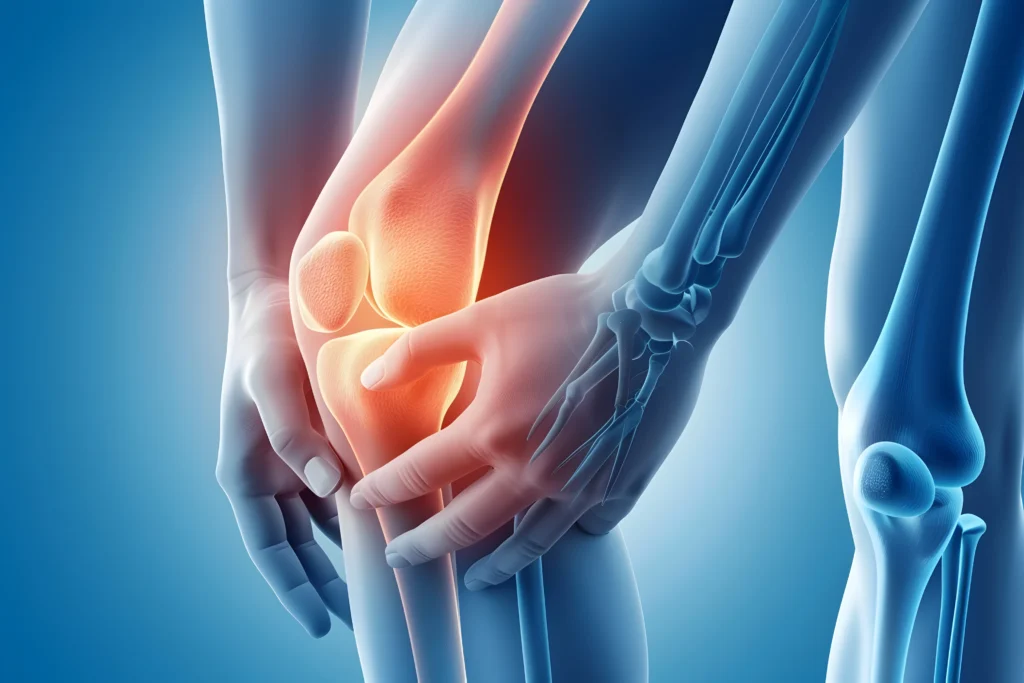
The knee is a hinge joint where the thigh bone meets the shin bone, with the kneecap in front. Smooth cartilage and two C-shaped cushions called menisci absorb shock, ligaments hold the joint steady and tendons connect the muscles that bend and straighten it. Pain can begin in any of these parts.
It may feel sharp, dull, aching or throbbing, and it often comes with swelling, stiffness, weakness or a feeling that the joint is unstable.
Mild vs. persistent knee pain
- Mild pain: appears after a long walk or workout, eases within a day or two of rest and does not cause swelling.
- Persistent pain: lasts more than a week or two, returns with the same activity, wakes you at night or limits stairs and walking.
Mild pain can usually be managed at home. Persistent pain is a signal that something structural may be involved.
When to Seek Help
When knee pain needs medical attention
- Pain that has not improved after one to two weeks
- Swelling that keeps returning
- A knee that locks, catches or gives way
- Pain that limits walking, stairs or sleep
Common Causes
Common Causes of Knee Pain
Osteoarthritis
Osteoarthritis is gradual wear of the cartilage that cushions the joint. It causes pain on activity, stiffness after rest and, in time, swelling and reduced movement. It is more common after 50, after an earlier knee injury and with extra body weight.
Sports injuries
Sudden twists, jumps, direct blows and quick changes of direction can sprain or strain the structures around the knee. Cricket, football, badminton and running are common sources, and the pain is often sharp with swelling within hours.
Ligament injuries (ACL, MCL)
The anterior cruciate ligament (ACL) sits inside the knee and often tears with a pivot or landing. Many people feel or hear a pop, followed by swelling and a sense that the knee will give way. The medial collateral ligament (MCL) runs along the inner knee and is usually hurt by a sideways blow, causing inner knee pain and tenderness.
Meniscus tear
A twist while the foot is planted can tear the meniscus. Typical signs are pain along the joint line, swelling over a day or two and catching or locking. In older adults a tear can occur with a simple squat or rise from a chair because the tissue has weakened.
Tendonitis
Tendonitis is irritation of a tendon from repeated load. Patellar tendonitis, sometimes called jumper’s knee, causes pain just below the kneecap that worsens with jumping, running and stairs.
Bursitis
Bursae are small fluid sacs that cushion the knee. Kneeling for long periods or a direct knock can inflame them, producing a soft swelling at the front or inner side of the knee with tenderness.
Gout
Gout occurs when uric acid crystals collect in a joint. It typically causes sudden, severe pain with redness and warmth, often in a single joint. It needs blood tests and specific treatment, which is different from other causes.
Rheumatoid arthritis
Rheumatoid arthritis is an autoimmune condition. It tends to affect both knees together along with other joints, and morning stiffness often lasts longer than an hour. Early diagnosis matters because treatment can protect the joint.
Age-related wear and tear
With age the cartilage thins, the muscles around the knee weaken and the joint absorbs shock less well. This produces a gradual ache that is worse at the end of the day. It differs from arthritis in that the change is milder and often responds well to exercise.
Symptoms
Symptoms Associated With Knee Pain
Swelling
Swelling means fluid or inflammation in or around the joint. Swelling within hours of an injury suggests bleeding inside the joint, often from a ligament tear. Swelling that builds slowly over a day or two is more typical of a meniscus tear or arthritis.
Stiffness
Stiffness after sitting or on waking is common in arthritis. Stiffness that eases within about half an hour points towards osteoarthritis, while stiffness lasting an hour or more raises the possibility of an inflammatory cause.
Difficulty walking
A limp, shorter steps or the need to hold a rail show that the joint is protecting itself. Difficulty walking that lasts more than a few days should be assessed.
Clicking or popping sounds
Painless clicking is very common and usually harmless. Clicking together with pain, swelling, catching or locking suggests a problem with the cartilage or meniscus.
Reduced range of motion
Being unable to fully straighten or bend the knee can come from swelling, a torn meniscus fragment or advanced arthritis. Loss of movement is worth reporting even if the pain is mild.
Knee instability
A knee that buckles or feels loose, especially when turning or coming down stairs, points to ligament injury or muscle weakness. Repeated giving way can damage the joint further, so it should not be ignored.
Pain while climbing stairs or sitting/standing
Stairs and rising from a chair load the joint heavily. Pain here is common with irritation behind the kneecap, osteoarthritis and tendon problems.
Types of Knee Pain
Types of Knee Pain
Where the pain sits is one of the most useful clues. The list below shows what each location often suggests, though only an examination can confirm the cause.
Front knee pain — pain around or behind the kneecap is common with patellofemoral pain, patellar tendonitis and early arthritis. It usually worsens on stairs, squatting and after sitting for a long time.
Inner knee pain — pain on the inner side often comes from the MCL, the inner meniscus or osteoarthritis affecting that side of the joint. Bursitis on the inner shin can also cause tenderness here.
Outer knee pain — pain on the outer side can arise from the lateral ligament, the outer meniscus or the iliotibial band, a thick strip of tissue along the outer thigh. Runners often notice it on downhill stretches.
Back of knee pain — pain behind the knee may come from a Baker’s cyst (a fluid-filled swelling linked to arthritis or meniscus problems) or from a hamstring or calf strain. Swelling and warmth in the calf with back-of-knee pain needs urgent medical review.
Knee pain while walking — pain that appears as you walk and settles when you stop often points to osteoarthritis, a tendon problem or a meniscus tear. Pain that starts only after some distance can also relate to footwear or leg alignment.
Knee pain while bending — pain on bending suggests irritation of the cartilage under the kneecap, a meniscus problem or tendon strain. In many Indian homes, sitting cross-legged, squatting and using floor-level seating bend the knee deeply and can bring this pain out early.
Knee pain at night — night pain can result from arthritis, from the position of the leg in bed or from a meniscus tear when lying on the side. Pain that wakes you or is present at rest should be examined rather than waited out.
Activity Triggers
Knee Pain After Different Activities
The activity that sets off the pain helps narrow the cause. Each activity below also comes with a practical tip.
Knee pain while walking
Check your footwear first, because worn soles and stiff or unsupportive shoes change how force travels through the knee. Walk on flat, even ground, shorten your stride if pain builds and rest when it sharpens. Pain that forces you to stop repeatedly needs assessment.
Knee pain while running
Running loads the knee several times body weight with each stride. Runner’s knee, iliotibial band pain and tendon strain are common. Reduce distance, avoid downhill runs while symptomatic and increase mileage gradually once you are pain free.
Knee pain after exercise
Mild, even soreness in both legs a day or two after a hard session is normal muscle recovery. Sharp, one-sided pain, swelling or a knee that feels unstable after exercise is different and suggests an injury.
Knee pain while climbing stairs
Stairs strain the joint behind the kneecap and the tendons around it. Use the handrail, take one step at a time, lead with the stronger leg going up and the weaker leg going down and avoid carrying heavy loads while the knee is sore.
Knee pain after sitting for a long time
A stiff, aching knee when you stand after a long sitting spell is common with kneecap irritation and early arthritis. Stand up and stretch every 30 to 60 minutes, keep the feet flat and avoid sitting with the knees deeply bent for hours.
Diagnosis & Management
How Is Knee Pain Diagnosed?
Diagnosis starts with your story: when the pain began, where it sits and what triggers it. The doctor then examines the knee for swelling, tenderness, movement, stability and how you walk. An X-ray shows bone and joint spacing, and an MRI is advised only when soft tissue such as a ligament or meniscus needs a closer look. Blood tests help when gout or an inflammatory arthritis is suspected.
How Is Knee Pain Managed?
Most knee pain is managed without surgery. The doctor begins with activity changes, medicines and strengthening exercises, and considers injections or an operation only when structural damage does not respond. The choice depends on the cause, your age and how much the knee limits your day.
Home Care Tips for Knee Pain
- Rest the knee for a day or two after a flare and avoid the movement that hurts.
- Apply a cold pack wrapped in cloth for 15 to 20 minutes to ease swelling after an injury.
- Use gentle support such as a soft bandage or a cushion under the knee while resting.
- Keep moving gently with short walks on flat ground once the sharp pain eases.
- Do not rely on painkillers for weeks. If you need them regularly, see a doctor.
FAQs
Frequently Asked Questions About Knee Pain
Climbing stairs loads the joint between the kneecap and the thigh bone several times more than walking on flat ground. Pain here often points to irritation behind the kneecap, early osteoarthritis or a tendon problem. If it persists or comes with swelling, get it examined.
Most knee pain is not dangerous and improves with rest and simple care. It becomes serious when you cannot bear weight, the knee looks deformed, swelling appears suddenly or the joint is hot and red with fever. These need prompt medical attention.
Mild pain from overuse or a minor strain often settles in a few days with rest and lighter activity. Pain from arthritis, a ligament tear or a meniscus tear usually does not go away fully without proper assessment and a treatment plan.
An orthopedic doctor is the right specialist for knee pain. If the cause turns out to be an inflammatory condition such as rheumatoid arthritis, you may also be referred to a rheumatologist.
Gentle walking on flat ground usually helps, because movement keeps the joint lubricated and the muscles strong. Stop and rest if walking sharpens the pain, causes swelling or makes the knee give way.
Surgery is considered only when structural damage, such as a torn ligament, a locking meniscus tear or advanced arthritis, is not improving with non-surgical care and is limiting daily life. Most patients begin with medicines, exercises and activity changes.
Consult with Dr. Ketaki Mohite, Knee Doctor in Erandwane, Pune
Pain that does not settle is worth a proper examination. Call 09049369955 or use the Book Appointment button, and we will find a time that suits you.
