
Home / Treatments / Back Pain
Back Pain: Causes, Symptoms and Types
Back pain is one of the most common reasons people miss work and see an orthopedic doctor. This guide explains what it means, what causes it, how it shows up, how its location and timing point to the cause and when it needs medical attention.
Back pain is discomfort in the upper, middle or lower back, most often caused by muscle strain, poor posture, disc problems or age-related wear of the spine. Most episodes settle within a few weeks. Pain with leg weakness, numbness, fever or bladder changes needs urgent medical attention.
Key Takeaways
Key takeaways
Most back pain is mechanical
Strained muscles and stiff joints from posture, lifting or inactivity are the usual cause.
Staying gently active helps
Short walks recover faster than prolonged bed rest.
Some signs cannot wait
Leg weakness, groin numbness or bladder changes need urgent care.
Leg symptoms matter
Pain, tingling or weakness travelling down the leg suggests a nerve is involved.
Understanding the Condition
What Is Back Pain?
Meaning and common symptoms
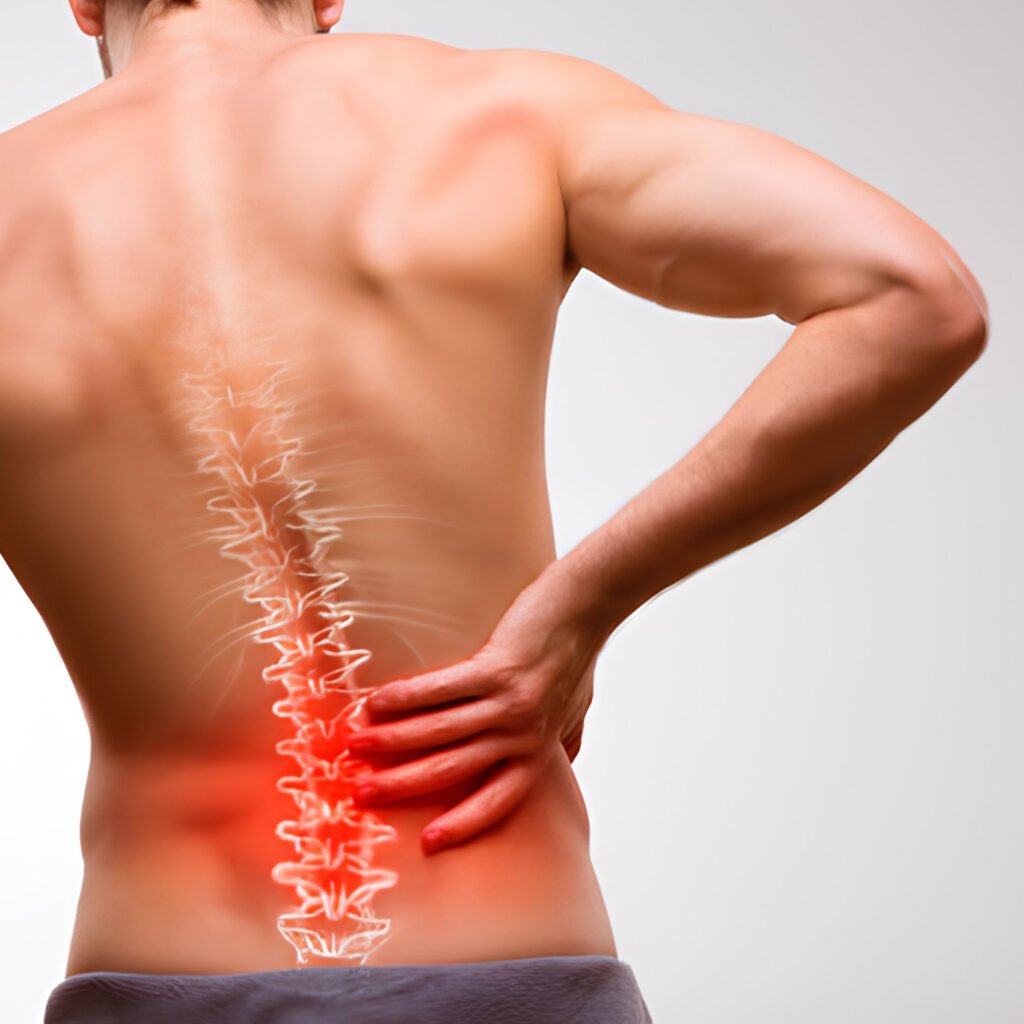
The spine is a column of bones called vertebrae, cushioned by discs and held together by joints, ligaments and muscles. It protects the spinal cord and nerves and lets you bend, twist and carry weight. Pain can start in any of these parts.
It may feel dull, sharp, burning or like a deep ache, and it often comes with stiffness, muscle spasm or pain that spreads to the buttock or leg.
Acute vs. chronic back pain
- Acute back pain: begins suddenly after a strain, awkward lift or long trip and improves within a few weeks.
- Chronic back pain: lasts longer than about three months, may come and go and often relates to disc wear, joint stiffness or weak core muscles.
Acute pain usually settles with simple care. Chronic pain deserves a proper assessment because the cause is often structural.
When to Seek Help
When back pain needs medical attention
Book a consultation if you notice any of these:
- Pain that has not improved after two weeks
- Pain that travels down one or both legs
- Numbness, tingling or weakness in the leg or foot
- Pain that wakes you at night or is present at rest
Go to the nearest emergency department first if you have:
- Numbness around the groin or loss of control over urine and stool
- Sudden weakness in one or both legs
- Back pain with fever, chills or unexplained weight loss
- Severe pain after a fall or road accident
Avoid bending or twisting while you get help.
Common Causes
Common Causes of Back Pain
Muscle strain and ligament sprain
Lifting a heavy load, twisting suddenly or overdoing a weekend workout can overstretch the back muscles and ligaments. The pain is usually a tight, aching band across the lower back that eases with movement over days.
Poor posture and desk work
Hours of sitting with rounded shoulders, a screen set too low or a chair without support overload the discs and tire the muscles. This is a leading reason for back pain among office workers and drivers.
Disc bulge or herniated disc
The discs between the vertebrae act as cushions. When a disc bulges or its centre pushes outward, it can press on a nearby nerve. This often causes back pain along with pain, tingling or numbness down the leg.
Lumbar spondylosis (age-related wear)
With age, discs lose water and the small joints of the spine develop wear. This causes stiffness that is worst in the morning or after rest and eases as you move about. It is very common after the age of 40.
Sciatica
Sciatica is pain along the path of the sciatic nerve, from the lower back through the buttock and down the back of the leg. It is usually caused by a disc problem or narrowing of the space around the nerve.
Spinal stenosis
Stenosis is narrowing of the spinal canal. It typically causes leg heaviness or pain when walking that eases on sitting or bending forward. It is more common in older adults.
Osteoporosis and compression fracture
When bones become thin, a vertebra can collapse with minimal force, even from a cough or a small fall. This causes sudden, localised back pain and is more common in women after menopause.
Spondylolisthesis
In this condition one vertebra slips forward over the one below. It can cause lower back pain, tight hamstrings and sometimes leg symptoms.
Injury and fracture
A fall, road accident or heavy blow can fracture a vertebra or injure the spine. Any back pain after significant trauma should be examined promptly.
Less common causes
Infection of the spine, tumours, inflammatory conditions such as ankylosing spondylitis and problems outside the spine, such as kidney stones, can also cause back pain. These usually come with other signs such as fever, night pain or morning stiffness in younger adults.
Symptoms
Symptoms Associated With Back Pain
Knee pain treatment
Care for pain, swelling and stiffness in the knee, from early wear to injury.
Muscle spasm
Muscles around the injured area tighten to protect the spine. The back feels hard and tender, and sudden movements can trigger sharp pain.
Pain spreading to the leg
Pain that travels below the knee usually points to irritation of a nerve root rather than a simple muscle strain.
Numbness or tingling
Pins and needles or a numb patch in the leg or foot indicate nerve involvement and should be reported.
Weakness in the leg or foot
Difficulty lifting the foot, a dragging toe or a leg that gives way needs prompt examination, because prolonged nerve pressure can cause lasting weakness.
Pain on bending or lifting
Pain that sharpens on bending forward is common with disc problems, while pain on leaning backward is more typical of joint wear or stenosis.
Difficulty standing straight or walking
A stooped posture, a limp or the need to stop and rest after a short distance shows that the spine or a nerve is affected.
Night pain
Pain that wakes you or is worse lying down is not typical of a simple strain and should be checked, especially if it comes with fever or weight loss.
Types of Back Pain
Types of Back Pain
Where the pain sits is a useful clue. The list below shows what each area often suggests, though only an examination can confirm the cause.
Upper back pain — pain between the shoulder blades or at the base of the neck usually comes from posture, muscle strain or long hours at a screen. Pain in this area with chest discomfort or breathlessness needs urgent medical review.
Middle back pain — pain in the mid spine is less common. It can result from muscle strain, rib joint problems or a compression fracture in people with weak bones.
Lower back pain — this is the most common type because the lower spine carries most of your body weight. Muscle strain, disc problems and joint wear are the usual causes.
Pain on one side of the back — pain on one side often reflects a muscle spasm, a stiff spinal joint or an irritated nerve. Pain on the right or left flank with fever or urinary symptoms may come from the kidney rather than the spine.
Back pain with leg pain — when the pain travels into the buttock and leg, a disc problem or sciatica is likely, and an examination of the nerves is needed.
Acute back pain — sudden pain that follows a clear trigger and improves steadily over days to weeks.
Chronic back pain — pain that persists beyond about three months. It often reflects disc wear, joint stiffness or weak core muscles and benefits from a structured exercise plan.
Activity Triggers
Back Pain After Different Activities
What sets off the pain helps narrow the cause. Each activity below comes with a practical tip.
Back pain after sitting for a long time
Sitting loads the discs and shortens the hip muscles. Sit with your hips at the back of the chair, feet flat and a small cushion behind the lower back. Stand up and walk for a few minutes every 30 to 45 minutes.
Back pain in the morning
Stiffness on waking is common with spinal wear and an old mattress. A firm, even surface and a few gentle knee-to-chest stretches before standing often help. Stiffness lasting more than an hour should be assessed.
Back pain while lifting or bending
Bend at the hips and knees, hold the load close to your body and avoid twisting while lifting. Pain that starts suddenly with a lift, especially with leg symptoms, may indicate a disc problem.
Back pain while driving or riding a two-wheeler
Vibration, a fixed posture and a poorly adjusted seat strain the lower back. Adjust the seat so your knees are level with the hips, take breaks on long trips and avoid riding on rough roads while the back is sore.
Back pain while standing or walking
Pain that builds with standing and eases on sitting can come from joint wear or stenosis. Wear cushioned footwear and avoid standing in one position for long periods.
Back pain after exercise
Mild soreness a day after a new workout is normal. Sharp pain during a lift, pain on one side or leg symptoms suggest an injury, and the activity should be paused until it is checked.
Diagnosis & Management
How Is Back Pain Diagnosed?
Diagnosis starts with your story: when the pain began, where it travels, what makes it better or worse and whether you have leg symptoms. The doctor then examines your posture, spine movement, muscle strength, reflexes and sensation, and checks for tenderness. An X-ray shows bone alignment and joint spacing. An MRI is advised only when nerve involvement, a suspected disc problem or a serious cause needs a closer look, and blood tests help when infection or an inflammatory cause is suspected.
How Is Back Pain Diagnosed?
Most back pain is managed without surgery. The doctor begins with staying active, medicines and strengthening exercises, and considers injections or an operation only when a nerve is under pressure or the spine is structurally damaged. The choice depends on the cause, your age and how much the pain limits your day.
Home Care Tips for Back Pain
- Keep moving gently. Short, slow walks are better than lying in bed.
- Apply heat with a warm compress for 15 to 20 minutes to relax tight muscles.
- Change position often and avoid sitting or standing in one posture for long.
- Sleep well supported. Lie on your side with a pillow between the knees or on your back with a pillow under the knees.
- Do not rely on painkillers for weeks. If you need them regularly, see a doctor.
FAQs
Frequently Asked Questions About Back Pain
Sitting keeps the lower back in one position and loads the spinal discs more than standing does. Slouching, a soft chair and a screen set too low add to the strain. Standing, walking for a few minutes every 30 to 45 minutes and sitting with the feet flat usually help.
Most back pain is not dangerous and improves with simple care. It becomes serious when it comes with leg weakness, numbness in the groin, loss of control over urine or stool, fever, unexplained weight loss or pain after a significant injury. These need urgent medical review.
Muscle strain and minor sprains often settle within a few weeks with gentle movement. Pain from a disc problem, spinal stenosis or a fracture usually needs a proper assessment, because it may not settle fully on its own.
An orthopedic doctor is the right first specialist for back pain. Depending on the cause, you may also be advised physiotherapy, or referred to a neurologist or a rheumatologist.
Long bed rest usually delays recovery. A day or two of taking it easy is reasonable, but staying gently active with short walks helps the back heal and keeps the muscles from stiffening.
Most back pain does not need an MRI. It is advised when there is leg weakness, pain spreading down the leg that does not improve, a history of cancer or infection, or when surgery is being considered.
Consult with Dr. Ketaki Mohite, Back Pain doctor in Erandwane
Pain that does not settle is worth a proper examination. Call 09049369955 or use the Book Appointment button, and we will find a time that suits you.
