
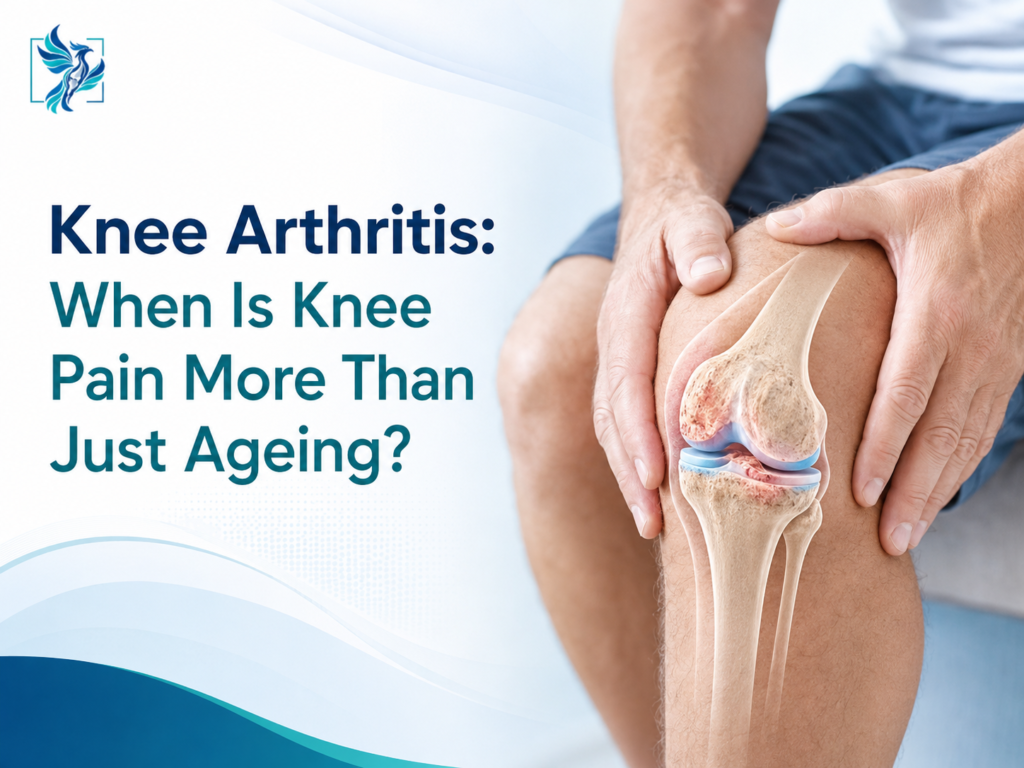
Knee Arthritis: Warning Signs You Should Know
“It’s just age.” Many people hear this when they complain about aching knees, and many simply accept it. But knee pain is not something you must live with as you grow older. In a large number of cases, the cause is knee arthritis, a joint condition that responds much better to treatment when it is identified early.
This guide explains what knee arthritis is, how to tell it apart from normal ageing, the early signs and symptoms to watch for, what causes it, how it is diagnosed, and which treatment options and exercises can help.
What Is Knee Arthritis?
Your knee joint is formed where the thigh bone (femur) meets the shin bone (tibia), with the kneecap (patella) in front. The ends of these bones are covered with smooth cartilage, and a thin joint lining produces fluid that keeps movement pain-free.
In arthritis in the knee joint, the cartilage gradually thins and the lining becomes inflamed. As the cushioning is lost, the bones can rub against each other, which leads to pain, swelling and stiffness. Over time, this knee damage from arthritis can change the shape of the joint and make everyday walking difficult.
Common types of knee arthritis
- Osteoarthritis (OA): the most common form, caused by gradual wear and tear of the cartilage.
- Rheumatoid arthritis (RA): an autoimmune condition in which the immune system attacks the joint lining. Knee rheumatoid arthritis often affects both knees along with other joints.
- Post-traumatic arthritis: develops after a fracture, ligament tear or meniscus injury.
- Gout and other inflammatory arthritis: cause sudden episodes of a hot, swollen and painful knee.
Normal Ageing vs Knee Arthritis: How to Tell the Difference
Some changes are expected as we age. Cartilage becomes a little thinner and joints may feel stiff after sitting for a long time. What separates arthritis from ordinary ageing is how long the symptoms last and how much they interfere with daily life.
| Normal ageing | Knee arthritis | |
| Stiffness | Eases within a few minutes of moving | Lasts 30 minutes or more, or returns repeatedly |
| Pain | Occasional, after heavy activity, settles with rest | Frequent or constant, may continue at rest or at night |
| Swelling | Usually absent | Recurring puffiness, warmth or tenderness |
| Movement | Full bending and straightening | Difficulty fully bending or straightening |
| Daily life | Little or no effect | Trouble with stairs, walking, squatting or getting up from a chair |
What Are the Signs of Knee Osteoarthritis?
The early signs of knee arthritis are easy to overlook because they come and go. Watch for:
- Stiffness after rest, especially in the morning or after sitting for a long time.
- Pain with activity such as climbing stairs or getting up from a chair, which settles with rest.
- Discomfort when squatting or sitting cross-legged on the floor.
- Clicking or a grating feeling when bending or straightening the knee.
- Mild puffiness around the knee towards the end of the day.
If these early knee arthritis symptoms keep returning for more than a few weeks, get your knee examined instead of waiting for the pain to worsen.
Knee Arthritis Symptoms in Advanced Stages
As the condition progresses, symptoms of arthritis in the knee become stronger and more constant:
- Pain at rest or at night that disturbs your sleep
- Visible swelling that keeps coming back, with warmth or tenderness
- Morning stiffness lasting longer than 30 minutes
- Reduced ability to bend or straighten the knee
- Grinding or crackling sounds with movement
- A weak or unstable knee that feels like it may give way
- Bony enlargement of the knee or bowing of the legs
- Needing support, such as a railing or stick, to walk comfortably
When to See a Doctor Without Delay
Some symptoms should not wait. Consult an orthopaedic doctor promptly if you have:
- Sudden, severe pain or swelling, especially after a fall or twisting injury
- A red, hot, painful knee, particularly with fever
- Inability to put weight on the leg
- A knee that locks, gets stuck or looks deformed
- Knee pain lasting more than two to three weeks despite rest
A proper evaluation helps rule out infection, injury or inflammatory arthritis, which need different treatment from simple wear and tear.
What Causes Arthritis in the Knee?
Age is a factor, but rarely the only one. The most common causes and risk factors include:
- Excess body weight: every extra kilo adds several kilos of load on the knees with each step.
- Previous injury: ligament, meniscus or fracture injuries can lead to arthritis years later.
- Family history: joint problems often run in families.
- Gender and hormones: women, especially after menopause, are affected more often.
- Work and lifestyle: repeated squatting, kneeling, heavy lifting or long hours of standing.
- Weak thigh muscles or poor alignment: such as bow legs, which overload one side of the knee.
- Inflammatory or autoimmune disease: including rheumatoid arthritis and gout.
Can Knee Arthritis Occur Before Age 50?
Yes. Knee arthritis is more common after 50, but it can begin in the 30s and 40s. Sports or road injuries, obesity, inflammatory conditions such as rheumatoid arthritis, and family history can all bring on knee pain from arthritis early. Persistent knee pain in a younger adult should not be written off as tiredness or overuse.
How Is Knee Arthritis Diagnosed?
Diagnosis begins with a discussion of your symptoms and a physical examination, where the doctor checks for swelling, tenderness, alignment and range of movement. Tests may include:
- Standing X-ray: shows narrowing of the joint space, bone spurs and changes in the knee bone.
- MRI: used when soft tissues such as the meniscus or ligaments need to be assessed.
- Blood tests: help identify or rule out knee rheumatoid arthritis, gout or infection.
- Joint fluid analysis: in selected cases, to look for infection or crystals.
Doctors also grade the severity of osteoarthritis from early to advanced, which guides the choice of treatment.
Treatment Options for Knee Arthritis
There is no single treatment that suits everyone. Knee pain treatment in Pune depends on the cause and severity of the pain. The goal is to reduce discomfort, maintain joint movement and help you stay active and independent. Treatment options are usually introduced step by step, based on your condition and recovery needs.
1. Lifestyle changes. Weight reduction is one of the most effective ways to relieve knee stress. Using supportive footwear and avoiding repeated deep squatting or long stair climbs can also help.
2. Exercise and physiotherapy. Strengthening the thigh muscles, especially the quadriceps, takes load off the joint. Low-impact activities such as walking, cycling and swimming are usually encouraged. Rest alone often makes stiffness worse.
3. Medication. Pain relievers, anti-inflammatory medicines or topical gels may be prescribed. These should be used under medical guidance, particularly if you have kidney, stomach or heart concerns.
4. Injections. Depending on the stage, your doctor may discuss options such as steroid or hyaluronic acid injections, or other joint-preserving treatments.
5. Surgery. When arthritis is advanced and pain no longer responds to other treatments, procedures such as knee replacement can restore comfort and mobility. Modern techniques and rehabilitation have made recovery far smoother than many people expect.
Can Knee Arthritis Improve Without Surgery?
In many people, yes. Early and moderate arthritis is often controlled with weight management, regular exercise, physiotherapy, medication and, when needed, injections. These measures can reduce pain, improve movement and slow progression. Surgery is usually considered only when arthritis is advanced and daily life remains significantly affected despite other treatments. An orthopaedic doctor can tell you which stage you are at and what to expect.
Knee Arthritis Exercises
The right knee arthritis exercises strengthen the muscles around the joint and keep it flexible. Common examples include:
- Quadriceps sets: press the back of the knee into the bed while tightening the thigh muscle.
- Straight leg raises: lying on your back, tighten the thigh and lift the straight leg a few inches.
- Heel slides: slide the heel towards your buttock and back to improve bending.
- Hamstring and calf stretches: gentle stretching to ease stiffness.
- Low-impact activity: walking, stationary cycling or swimming.
Start slowly and stop if an exercise causes sharp pain. Because the right routine depends on the stage of arthritis, learn the exercises first from a physiotherapist or orthopaedic doctor.
“How I Cured My Knee Osteoarthritis”: What Does It Really Mean?
Personal stories about how someone cured their knee osteoarthritis are popular online, but they need careful reading. Cartilage that has worn away does not grow back on its own, so osteoarthritis cannot be reversed by a single remedy, supplement or oil. What many people truly achieve is control: less pain, better movement and slower progression through weight loss, exercise, physiotherapy and proper medical care.
Be wary of any product or treatment that promises a quick or permanent cure. A correct diagnosis and a plan from a qualified doctor are the safest starting point.
Tips to Protect Your Knees Every Day
- Maintain a healthy weight
- Stay active with gentle, regular exercise instead of long periods of rest
- Warm up before walking or exercising
- Avoid sitting cross-legged or squatting for long periods if it hurts
- Wear cushioned, well-fitting footwear
- Do not ignore pain that keeps returning
Knee Arthritis Treatment in Pune: Choosing the Right Doctor
If you are looking for knee arthritis treatment in Pune, choose an orthopaedic doctor for knee pain who examines your knee carefully, explains your X-ray in plain language and discusses all options, not just surgery. A knee osteoarthritis doctor in Pune can assess how advanced your arthritis is and build a plan around your age, work and lifestyle.
Dr. Ketaki Mohite is an orthopedic doctor in Erandwane, Pune, who evaluates knee pain and helps patients understand whether their symptoms are due to ageing, arthritis or another problem. A consultation with her typically includes:
• A detailed discussion of your symptoms, daily activities and medical history
• A physical examination of your knee, including movement, swelling and alignment
• A review of X-rays or other reports, and further tests if they are needed
• A clear explanation of your diagnosis and a treatment plan suited to your age, work and lifestyle
- You should consider a consultation for knee pain treatment in Pune if:
- Your knee pain has lasted more than a few weeks
- You have repeated swelling or stiffness
- Pain affects walking, stairs or sleep
- Painkillers and home remedies no longer help
Clinic address: [Phoenix Orthopaedic Consultation Clinic 3rd Floor, B Wing, Estonia Building, opposite Mendhale Garage, Swaroop Society, Erandwane, Pune 411004 ]
Phone / WhatsApp: [+919049369955 ]
Frequently Asked Questions
What is knee arthritis?
Knee arthritis is a condition in which the cartilage and lining of the knee joint wear down or become inflamed, causing pain, stiffness and swelling. Osteoarthritis is the most common type.
What are the first signs of knee osteoarthritis?
Early signs include stiffness after rest, pain when climbing stairs or getting up from a chair, mild swelling, and occasional clicking or grinding in the knee.
Can knee arthritis occur before age 50?
Yes. Injury, obesity, inflammatory arthritis and family history can cause knee arthritis in the 30s and 40s.
How is knee arthritis diagnosed?
It is diagnosed by physical examination and X-rays. An MRI or blood tests may be added to check soft tissues or to rule out rheumatoid arthritis or gout.
Can knee arthritis improve without surgery?
Often, yes. Weight control, exercise, physiotherapy, medicines and injections relieve symptoms in many people, especially in the early and moderate stages.
What causes arthritis in the knee?
Common causes include aging, excess weight, past injury, family history, hormonal changes after menopause, heavy physical work and autoimmune conditions.
Which doctor should I consult for knee pain in Pune?
An orthopaedic doctor is the right specialist for knee pain. You can consult Dr. Ketaki Mohite, orthopedic doctor in Erandwane, Pune, for an examination and a treatment plan.
Conclusion
Knee pain that keeps returning, wakes you at night or stops you from doing what you enjoy is more than ageing. The earlier knee arthritis is diagnosed, the more treatment options you have and the better your chance of staying active and independent for years to come.

Pingback: Osteoarthritis of the Knee: 7 Early Signs & Treatment