
Home / Orthopedic Treatment / Fracture Treatment
Fracture Treatment in Erandwane, Pune
Fracture treatment in Erandwane, Pune is available at Phoenix Orthopaedic Consultation Clinic, where Dr. Ketaki Mohite examines the injury, reads your X-rays and explains whether the bone needs a cast, a splint, realignment or surgery. A fracture is a break in a bone. The right treatment depends on which bone is broken, how it has broken and the age and health of the patient.
This page explains the treatment options in plain language: non-surgical care, surgical fixation, treatment for each part of the body, fractures after accidents, care for children and older adults, recovery and follow-up. Every plan is based on your own examination and X-rays, so the information here is a guide and not a promise of results.
Treatment Options
Fracture Treatment in Erandwane, Pune: Available Treatment Options
Doctors choose from a small set of methods and often combine them. These are the options Dr. Ketaki Mohite may discuss with you:
- Immobilisation: Keeping the broken bone still allows it to join. Depending on the bone this may be a cast, splint, brace, sling or walking boot. Nearly every fracture needs some form of it.
- Cast treatment: A cast of plaster or fibreglass wraps the limb firmly and holds the bone in position for weeks. It suits fractures that are stable or have been realigned and it is checked at follow-up visits.
- Splint or brace treatment: A splint supports the limb but leaves room for swelling, so it is often the first step after an injury. Braces are used for stable fractures or later in healing when some movement is allowed.
- Closed reduction: If the bone ends have moved out of line, the doctor can often move them back into place by hand without any cut, using pain relief or anaesthesia as needed. An X-ray confirms the position and a cast or splint then holds it.
- Surgical fracture fixation: When a cast cannot hold the bone well enough, surgery fixes the pieces in position with plates, screws, nails, pins or an external frame. The details are in the surgical treatment section below.
- Open fracture management: When the bone has broken the skin, germs can reach the bone, so treatment is urgent. It includes cleaning the wound, antibiotics, tetanus protection, stabilising the bone and usually surgery.
- Post-treatment rehabilitation: Once the bone is stable, exercises restore movement, muscle strength and walking. The doctor decides when to begin and how quickly to progress.
Non-Surgical Care
Non-Surgical Fracture Treatment in Erandwane, Pune
Many fractures heal well without an operation. Non-surgical treatment works when the bone is in good position or can be moved into good position and stay there.
When Casting Is Appropriate
| A cast is usually suitable when | Surgery is usually considered instead when |
|---|---|
| The bone is aligned or can be realigned and stays aligned | The bone slips out of line after realignment |
| The break pattern is simple and stable | The bone is broken into several pieces or the pattern is unstable |
| The joint surface is not involved | The joint surface is stepped or broken |
| The skin is intact and the soft tissue is healthy | There is an open wound or serious soft tissue damage |
| The patient is a child, whose bones can remodel as they grow | An adult bone needs very precise alignment, as in the forearm or ankle |
- Splinting: A splint is often applied first while swelling settles and a cast or brace follows. Some stable fractures, such as certain foot fractures, stay in a removable splint or boot.
- Activity restriction: You may be asked to keep weight off the leg, avoid lifting with the arm, stay away from sports and avoid driving until cleared. Keeping the limb raised above heart level helps swelling.
- Pain management: Pain is controlled with medicines as prescribed, elevation and a cold pack wrapped in cloth. Do not raise the dose on your own and tell the doctor about other illnesses and medicines. Pain that gets worse instead of better, especially under a cast, needs a review.
- Follow-up X-rays: Repeat X-rays in the first weeks catch a bone that is slipping while it can still be corrected. Later X-rays show how the bone is healing.
- Monitoring alignment and healing: At each visit the doctor checks position on X-ray, tenderness at the fracture, skin, blood flow and movement of the fingers or toes. The plan changes if healing is not on track.
Surgical Care
Surgical Fracture Treatment in Erandwane, Pune
Surgery is not the first choice for every fracture but it is the better choice for some. Dr. Ketaki Mohite explains why surgery is advised, what the operation involves and the risks before you decide.
When Surgery Is Considered
- The bone is displaced or unstable and a cast cannot hold it
- The fracture slips out of position after a cast is applied
- The fracture is open, with a wound over the break
- The break enters a joint and the joint surface must be made smooth again
- The bone is broken into several fragments
- The fracture is in a bone such as the hip or thigh bone, where early movement matters for recovery
- A nerve or blood vessel is injured or the fracture has not healed in the expected time
Reduction and Fixation
Reduction means moving the bone back into its correct position and fixation means holding it there while it heals. In open reduction and internal fixation the surgeon exposes the fracture, aligns the fragments and secures them with metal implants. The aim is a stable bone that allows early movement and a return to daily activities.
| Method | What it is | Commonly used for |
|---|---|---|
| Plates and screws | A metal plate is fixed along the surface of the bone with screws | Forearm, wrist, ankle, elbow, collarbone and fractures near joints |
| Intramedullary nails |
A metal rod passed through the hollow centre of a long bone and locked with screws | Thigh bone, shin bone, some upper arm and hip fractures |
| Pins or K-wires | Thin metal wires placed across the fracture, often removed after healing | Fingers, hand, wrist, some elbow and foot fractures and children's fractures |
| External fixation | A frame outside the body held by pins that go into the bone | Selected complex or open injuries and limbs too swollen for internal fixation at first |
Postoperative Monitoring
After surgery the doctor checks the wound, pain, blood flow and nerve function and confirms the new position with an X-ray. Movement and weight-bearing begin as the fixation allows. You will be told which warning signs to report: fever, redness, discharge from the wound, increasing pain or swelling and tenderness in the calf.
As with any operation there are risks, including anaesthesia-related problems, bleeding, infection, stiffness, implant problems and delayed or incomplete healing. These are discussed with you before surgery.
By Body Part
Fracture Treatment by Body Part
For Fracture Treatment in Erandwane, Pune, the choice between a cast and surgical fixation depends on the bone involved, the type of fracture, and its severity. The following sections explain common treatment approaches for different body parts. Your treatment plan is determined by Dr. Ketaki Mohite after evaluating your X-rays and clinical condition.
Wrist Fracture Treatment
Many wrist fractures, usually of the radius near the wrist joint, are treated with a cast, sometimes after the doctor realigns the bone by closed reduction. A cast works well when the break is not displaced or stays in position on repeat X-rays. Fixation with a plate and screws or with K-wires may be considered if the bone slips after realignment, the joint surface is broken or the fracture has several pieces. Repeat X-rays in the first one to two weeks matter because a wrist fracture can slip inside the cast. Moving the fingers and shoulder while the wrist heals helps limit stiffness.
Hand and Finger Fracture Treatment
Stable fractures of the finger and hand bones are often treated with a splint or by strapping the injured finger to its neighbour, which allows early movement and lowers the risk of stiffness. Fixation with wires, screws or small plates may be considered if the fracture is displaced, enters a joint or makes the finger rotate or overlap when a fist is made. A scaphoid fracture, which causes pain at the base of the thumb after a fall, can be missed on the first X-ray, so repeat imaging or a scan may be advised. A wound over a hand fracture needs prompt attention.
Forearm Fracture Treatment
The radius and ulna work together to turn the palm up and down, so alignment matters more here than in many other bones. In children a cast often works well even for displaced breaks because their bones remodel as they grow. In adults a fracture of both bones or a displaced shaft fracture usually needs plates and screws to restore rotation. A single undisplaced break of the ulna may be treated with a cast or brace. Repeat X-rays check that the position holds.
Elbow Fracture Treatment
Undisplaced elbow fractures are usually treated with a splint or sling followed by early guided movement, because the elbow stiffens quickly. Fixation with wires, screws or plates is considered when the fracture is displaced, enters the joint or involves the bony tip of the elbow (olecranon) or the head of the radius. In children, a fracture just above the elbow (supracondylar fracture) needs prompt assessment and often wires to hold the bone. The doctor also checks nerve function and blood flow in the hand at the first visit.
Shoulder and Clavicle Fracture Treatment
Most collarbone fractures heal with a sling and rest, even when the bone looks out of line on X-ray. Fixation with a plate or nail may be considered if the bone is badly displaced or shortened, a bone end is pressing on the skin or there are several fragments. Fractures of the upper end of the arm bone near the shoulder are often treated with a sling and early gentle exercises when they are stable. Displaced or multi-fragment shoulder fractures may need a plate, a nail or in selected older patients a shoulder replacement.
Hip Fracture Treatment
A hip fracture in an older adult is usually treated with surgery, because weeks in bed lead to problems such as pressure sores, chest infection and blood clots. The operation depends on the fracture: screws, a nail or a plate to fix the bone or a partial or total hip replacement for many displaced fractures of the femoral neck. The aim is to let the person sit up and stand within a day or two when medically fit. Non-surgical treatment is kept for a few stable fractures and for people too unwell for anaesthesia. Younger patients with a hip fracture usually need urgent fixation to protect the blood supply of the hip joint.
Femur Fracture Treatment
A fracture of the thigh bone shaft is usually treated with surgery, most often an intramedullary nail, because the thigh muscles are strong and a cast cannot hold the bone steady. Surgery also lets the patient start moving early, which lowers the risk of complications. Fractures near the knee end of the femur often need a plate. Casts or traction are used mainly in young children, sometimes with a hip spica cast. Recovery is longer than for most other fractures and needs close follow-up and physiotherapy.
Tibia and Leg Fracture Treatment
A stable, undisplaced fracture of the shin bone (tibia) can be treated in a cast or brace with repeated X-rays. Displaced or unstable shaft fractures are commonly fixed with an intramedullary nail, while fractures near the knee or ankle joint usually need plates and screws. A break of the thinner outer bone (fibula) alone often needs no surgery. An open tibia fracture needs urgent wound care and stabilisation, sometimes with an external fixator. Increasing pain, tight swelling or numbness in the leg, especially after plaster or surgery, needs prompt review.
Knee Fracture Treatment
A kneecap (patella) fracture that is not displaced, in which the leg can still be lifted straight, is treated with a brace or cylinder cast. If the pieces have separated or the leg cannot be straightened against gravity, fixation with wires or screws is considered. Fractures around the knee joint, such as the top of the shin bone (tibial plateau) or the lower end of the thigh bone, often need plates and screws to restore a smooth joint surface. Weight-bearing is usually limited for some weeks and the plan is set after X-rays or a CT scan.
Ankle Fracture Treatment
A stable ankle fracture, such as a break of the outer ankle bone with the joint in its proper position, may heal in a cast or walking boot. Fixation with plates and screws is considered when the fracture is unstable, both sides of the ankle are broken or the ankle joint has shifted out of place. Swelling can be marked, so surgery is sometimes planned a few days after the injury once the skin settles. Weight-bearing instructions differ for every ankle fracture, so please follow them strictly.
Foot and Toe Fracture Treatment
Most toe fractures heal with buddy taping to the next toe and a stiff-soled shoe. Many fractures of the long foot bones (metatarsals) are treated with a boot or cast, while displaced ones may need pins or screws. Heel bone (calcaneus) fractures and injuries where the midfoot bones have shifted out of place, known as Lisfranc injuries, more often need fixation. Stress fractures of the foot are treated with rest and protected walking. The cause, such as footwear or training load, is corrected.
After an Accident
Fracture Treatment After an Accident
Accidents often cause more than one injury, so the first step is a careful look at the whole person and not only the obvious fracture.
- Road accident fractures: Two-wheeler and pedestrian injuries commonly break the collarbone, forearm, thigh bone, shin and ankle. High-energy fractures are more likely to be displaced or open and may come with injuries to nerves, blood vessels or other organs.
- Fall-related fractures: Falls on stairs, wet bathroom floors or from a ladder often break the wrist, hip, shoulder or ankle. Weak bones make a fall more likely to cause a fracture.
- Sports injuries: Collisions and twisting injuries in cricket, football, badminton and running cause ankle, finger, collarbone and forearm fractures. Stress fractures come from repeated load. A return-to-sport plan is part of treatment.
- Multiple fractures: When more than one bone is broken the doctor looks for hidden injuries, decides which fracture needs treatment first and plans care so that the patient can move as early as is safe.
- Open fractures: If bone has broken the skin, cover the wound with a clean cloth and do not push the bone back. Urgent cleaning, antibiotics, tetanus protection and stabilisation are needed.
- Initial stabilisation: Keep the injured part still in the position you found it. Support it with a padded rigid object such as folded cardboard, press a clean cloth on any bleeding and place a cold pack wrapped in cloth on the swelling. Avoid food and drink until a doctor has seen the injury in case surgery is needed. Never massage or straighten the limb.
- Orthopedic assessment: The doctor asks how the injury happened, examines the skin, blood flow, nerves and the joints above and below. X-rays are taken from more than one angle. A CT scan may be added for joint fractures and complex breaks.
- Surgical vs non-surgical management: The decision depends on whether the bone is stable, how far it has moved, whether the wound is open, whether a joint is involved, other injuries, your age and health and what you need to get back to. You are shown the options and the reasons for the advice.
Children
Fracture Treatment in Children
Children’s fractures differ from adult fractures. Their bones are softer, heal faster and can correct some deformity as they grow, so many children’s fractures are treated with a cast or splint and no surgery.
- Common patterns: A greenstick fracture is a bend and crack on one side of the bone. A buckle (torus) fracture is a stable crumple of the bone and is often treated with a removable splint or a short cast.
- Growth plate injuries: The growth plate is the soft area near the end of a child's bone. An injury here needs closer follow-up with X-rays because damage can change how the bone grows.
- When surgery is considered: Surgery is considered for displaced or unstable fractures, fractures that enter a joint or growth plate and open fractures. Wires or elastic nails are commonly used in children.
- Cast care for parents: Keep the cast dry and the limb raised and do not let the child push objects inside. Report swelling of the fingers or toes, colour change, increasing pain, numbness, a bad smell or fever.
- Medicines: Doses for children depend on weight and the specific medicine, so give pain medicines exactly as the doctor advises.
- Return to play: School activities and sports resume when the bone has healed on X-ray and the child has regained movement and strength.
Older Adults
Fracture Treatment in Older Adults
In older adults a fracture often points to weaker bones, so treatment looks after the break and the bone health behind it. Decisions also take into account other illnesses such as diabetes, heart and kidney conditions and medicines such as blood thinners, so please bring a full list of your medicines.
- Hip fractures: Most need surgery so that the person can get out of bed early. The type of operation depends on the fracture and the person's health.
- Falls: Poor lighting, loose rugs, wet floors, poor footwear, weak muscles, poor eyesight and medicines that cause drowsiness or low blood pressure all raise the risk. Fixing these at home lowers the chance of a second fall.
- Bone health: A fracture from a minor fall is called a fragility fracture and it raises the risk of another. A bone density test, calcium and vitamin D as advised and treatment for osteoporosis when needed help protect the other bones.
- Mobility: The goal is to get back to independent walking, with a stick or walker if needed, while keeping daily activities going.
- Early mobilisation where clinically appropriate: Sitting up and standing early lowers the risk of chest infection, clots and pressure sores. The doctor decides the timing based on the fracture and how it was fixed.
- Rehabilitation: Physiotherapy rebuilds strength, balance and walking. A home exercise plan keeps the progress going after the clinic visits end.
Recovery
Recovery After Fracture Treatment
Recovery has several stages and pain relief alone does not mean the bone is strong. These are the parts of recovery to plan for:
- Bone-healing period: The body first forms soft new bone around the break, then this hardens and is reshaped over months. X-rays show the progress. Pain often settles before the bone is fully strong.
- Cast or splint period: The time depends on the bone and the break. Keep the cast dry, raise the limb, move the joints that are free and never cut or remove the cast yourself.
- Follow-up: Scheduled visits check position and healing. Please do not skip them because the pain has settled.
- Gradual movement: Stiffness is common after a fracture. Movement starts as soon as the doctor says the bone is stable enough and increases step by step.
- Physiotherapy: It restores movement, strength, balance and walking. The doctor sets the start time, which may be after the cast comes off or earlier for stable fixation.
- Return to work: Desk work usually resumes sooner than manual work or work that needs standing or lifting. Driving should wait until you can control the vehicle safely and the doctor agrees.
- Return to sports: Sport resumes when the bone has healed on X-ray, movement and strength are close to the other side and the doctor gives clearance. Sport-specific training is built up gradually.
Weight-Bearing After a Leg Fracture
| Term | What it means |
|---|---|
| Non-weight-bearing | No weight at all on the limb. Crutches or a walker are used |
| Toe-touch | The foot rests on the floor for balance but carries almost no weight |
| Partial weight-bearing | A set share of body weight, as the doctor specifies |
| Weight-bearing as tolerated | As much weight as is comfortable |
| Full weight-bearing | Normal walking with no restriction |
Putting weight on the bone too early can move the fracture or loosen the implants, so move to the next stage only when the doctor says so.
Recovery Time
Fracture Recovery Time
Recovery time varies depending on the type and severity of the fracture, the bone involved, and the patient’s overall health. For Fracture Treatment in Erandwane, the table below outlines the key factors Dr. Ketaki Mohite considers when assessing expected healing time and planning follow-up care.
| Fracture | Typical healing and recovery considerations |
|---|---|
| Finger or toe | Often shorter than major long-bone fractures. Stiffness and swelling can take longer to settle than the bone itself |
| Wrist | Commonly several weeks, with functional recovery such as movement and grip strength continuing afterward |
| Forearm | Usually requires several weeks of healing. Adults treated with plates still need exercises to regain turning movement |
| Clavicle | Often several weeks, with a sling at first and a gradual return to lifting and overhead movement |
| Tibia | Usually longer than upper-limb fractures because the bone carries body weight. It depends on the pattern and whether the fracture was fixed |
| Femur | A major fracture requiring longer recovery, with a gradual return to walking and a longer period of physiotherapy |
| Hip in older adults |
Depends heavily on overall health, how well the person walked before the injury and how early rehabilitation starts |
| Ankle | Depends on stability and whether surgery is required. Swelling can last for months |
Healing time can vary depending on age, fracture severity, bone quality, smoking, diabetes, nutrition, vitamin D levels, and adherence to weight-bearing instructions. For Fracture Treatment in Erandwane, Dr. Ketaki Mohite assesses the X-rays and clinical findings to estimate the expected healing period and adjusts the guidance during follow-up visits based on the progress of recovery.
Follow-Up
Follow-Up After Fracture Treatment in Erandwane, Pune
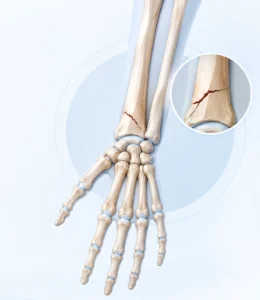
Follow-up is where problems are caught early. A typical plan includes these checks:
| Follow-up check | Why it matters |
|---|---|
| Checking fracture alignment |
Comparing the position with the first X-ray shows if the bone has slipped. A slip found early can often still be corrected |
| Repeat imaging when needed |
X-rays at planned intervals track healing. A CT or MRI scan is used when the X-ray does not show enough |
| Cast or splint assessment |
The fit, skin and swelling are checked, since a cast that is too tight or loose causes problems |
| Wound review after surgery |
Stitches and dressings are checked so that any infection is found early |
| Monitoring bone healing |
Pain, tenderness and the new bone seen on X-ray show when the next stage can begin |
| Identifying delayed healing |
If healing is slower than expected, the doctor looks for causes such as poor stability, infection, smoking or diabetes and adjusts treatment |
| Progressing weight- bearing |
Weight is added in steps. Too early risks displacement and too late weakens the limb |
| Rehabilitation planning | Exercises and physiotherapy are timed to the healing so that movement and strength return safely |
Why Choose Us
Why Choose Dr. Ketaki Mohite for Fracture Treatment in Erandwane?
Dr. Ketaki Mohite is an orthopaedic doctor with an MS in Orthopaedics. At Phoenix Orthopaedic Consultation Clinic in Erandwane, Pune, she evaluates fractures and other orthopaedic conditions, explains suitable treatment options, and provides guidance on follow-up care and recovery. Choosing a doctor involves considering their qualifications, the clarity of their explanations, and the convenience of attending follow-up visits. These factors can help patients make informed decisions about their orthopaedic care.
| Training and experience | Details |
|---|---|
| MBBS | Pravara Institute of Medical Sciences, 2017 |
| MS Orthopaedics | NKP Salve Institute of Medical Sciences and Research Centre and Lata Mangeshkar Hospital, Nagpur, 2022 |
| Role | Orthopedic surgeon, with consultation for orthopaedic and trauma-related problems |
| Past experience | Senior Resident, Smt. Kashibai Navale Medical College and General Hospital |
| Registration | Medical registration verified. Registration number to be added after client confirmation |
- A clear explanation: You see your X-rays with the doctor, hear why a cast or surgery is advised and get the other options as well.
- An individualised plan: The plan considers your age, work, other illnesses and daily needs and not only the picture on the X-ray.
- Planned follow-up: Position and healing are checked at set visits so that problems are found early.
- A convenient location: Phoenix Orthopaedic Consultation Clinic is at Vakil Nagar, Erandwane. It is easy to reach from Kothrud, Karve Road, Deccan Gymkhana, Law College Road, Prabhat Road and Paud Road.
FAQs
Frequently Asked Questions
No. Many fractures, especially stable or undisplaced ones and most children’s fractures, heal with a cast, splint or brace. Surgery is advised when the bone is displaced, unstable or open, involves a joint or cannot be held in a good position with a cast. Dr. Ketaki Mohite decides this after reviewing your X-rays.
Some can. A broken collarbone is treated with a sling, a broken toe with buddy taping and some rib or hairline fractures with rest and protection. Fractures of weight-bearing bones usually need firm support. The position of the bone matters as much as the healing, so get it examined before deciding to skip a cast.
Closed reduction is used when the bone ends have moved out of line but can be moved back by hand and held with a cast. It is common for wrist, forearm and ankle fractures and for children’s fractures. It is done with pain relief or anaesthesia, with X-rays before and after. If the bone slips again, fixation may be advised.
They are needed when a fracture is displaced or unstable, enters a joint, has several fragments or slips in a cast. They are also used in bones where exact alignment matters, such as the forearm and ankle. The implants hold the bone while it heals and allow earlier movement. They usually stay in place but may be removed in selected cases.
It varies from a few weeks for a finger or toe to several months for a large bone such as the thigh bone. Treatment includes the cast or surgery, follow-up visits and rehabilitation. The doctor gives an estimate after your X-rays and updates it as healing is seen.
Only when the doctor says so. It depends on the bone, how stable the fixation is and what the X-rays show. Most plans move from no weight to partial weight to full weight in stages. Weight too early can displace the bone or damage the implants.
It depends on how stable the bone is. After a cast it usually starts when the cast comes off, though the joints that are free can be moved earlier. After surgery, gentle movement can start within days if the fixation is stable. Please do not begin massage or forceful stretching on your own.
Light daily activities return earlier. Heavy lifting, driving and sport come later and in steps. The bone stays weaker than normal for some time after the pain eases, so the doctor clears each stage after checking X-rays and movement.
Yes. An old fracture may need treatment if it healed in a wrong position, has not joined or causes pain, stiffness, deformity or joint arthritis. Fresh X-rays or a CT scan show what can be done. Options range from physiotherapy to corrective surgery or bone grafting. An old fracture does not mean nothing can be done.
See one as soon as you suspect a fracture: pain after an injury with swelling, deformity or difficulty using the limb. Also go if a supposed sprain is still painful after a few days or you cannot put weight on the limb. Bone through the skin, heavy bleeding or a cold, pale or numb limb need attention without delay. Do not wait for the swelling to settle.
You can consult Dr. Ketaki Mohite at Phoenix Orthopaedic Consultation Clinic in Erandwane, Pune, for an assessment of a suspected or confirmed fracture and guidance on suitable treatment options.
Start Your Fracture Treatment in Erandwane, Pune
A suspected fracture requires timely medical assessment to determine the appropriate care. For Fracture Treatment in Erandwane, Pune, call 09049369955 or use the Book Appointment button to schedule a consultation with Dr. Ketaki Mohite.
